Conservation & research
Science, research and conservation
Láki Tours is helping to support research by working on photo ID when out on our whale watching tours. Commercial whale watching boats are often on the water seeing the animals more than scientific researchers and so undertaking research while we are out on trips helps us to learn more about the whales we are seeing.
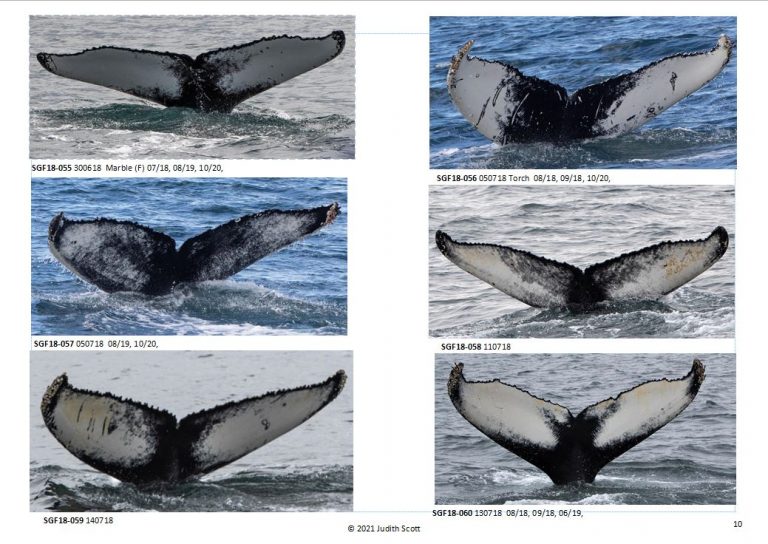
Photo-ID is the main form of research that can be done from a whale watching boat. We take photos of parts of the whales that have unique patterns and scars and using these photos we can identify individuals and learn more about them. Using this benign form of research we can learn more about population sizes, find out about lifespans, calving intervals and migrations, just by taking photos!
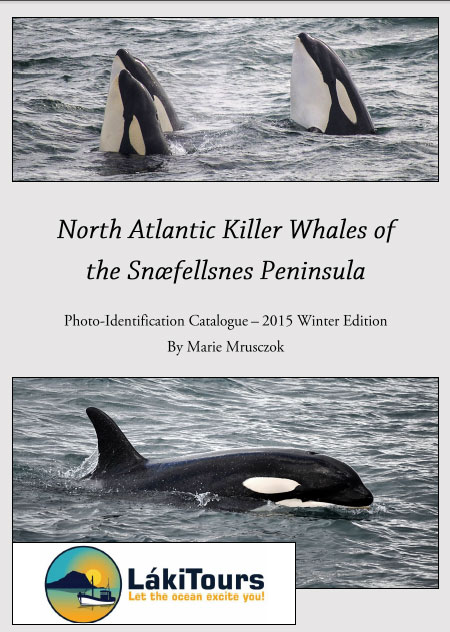
Láki Tours guides Marie and Judith have each created photo ID catalogues. Marie for orcas seen from Olafsvik and Judith for the humpback whales seen from Holmavik.
Orcas (killer whales)
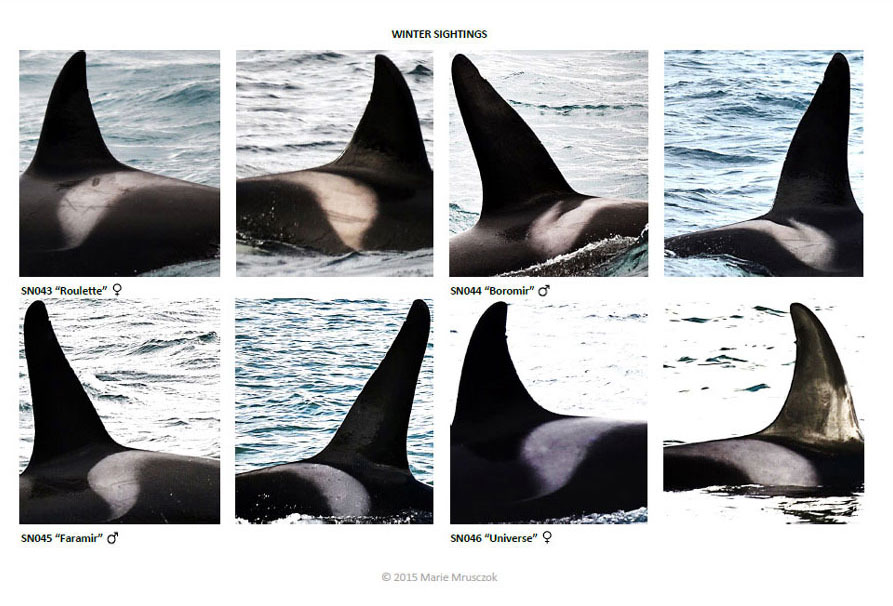
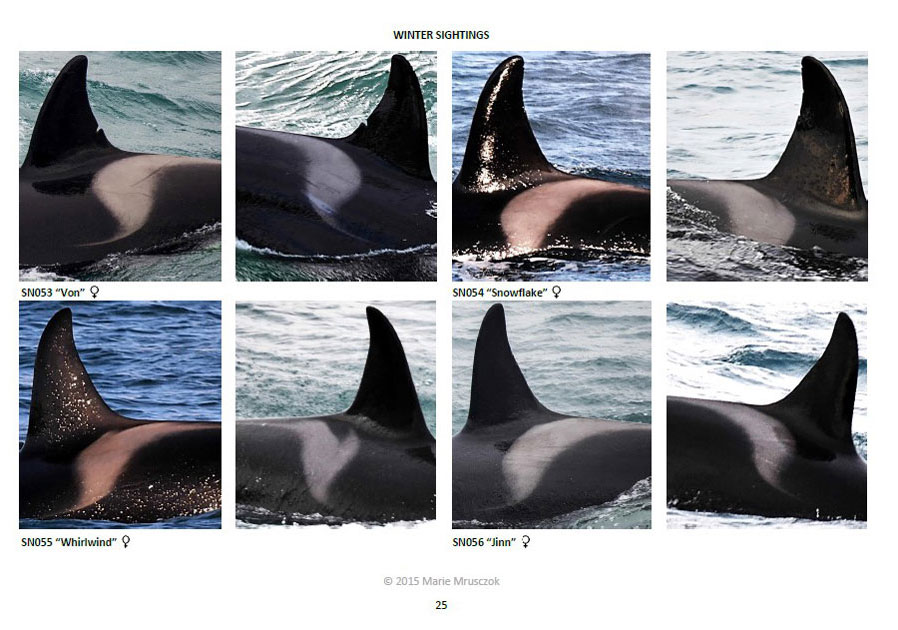
Marie Mrusczok has been photographing and studying the orcas seen in Snæfellsnes since 2015 when she created the first orca catalogue for our area. She set up the non-profit organisation Orca Guardians to help spread the word about her work. Each orca can be identified by the dorsal fin and also the grey saddle patch behind the fin, which often has marks and scars. Using photo ID we have learned more and more about the family groups of orcas that move between Iceland and Scotland and feed on different food in each area. Orcas have also been matched much further than Scotland using photo ID.
More information and the most recent catalogue can be found on the Orca Guardians website: https://orcaguardians.org/orca-id-catalogues/
Humpback whales
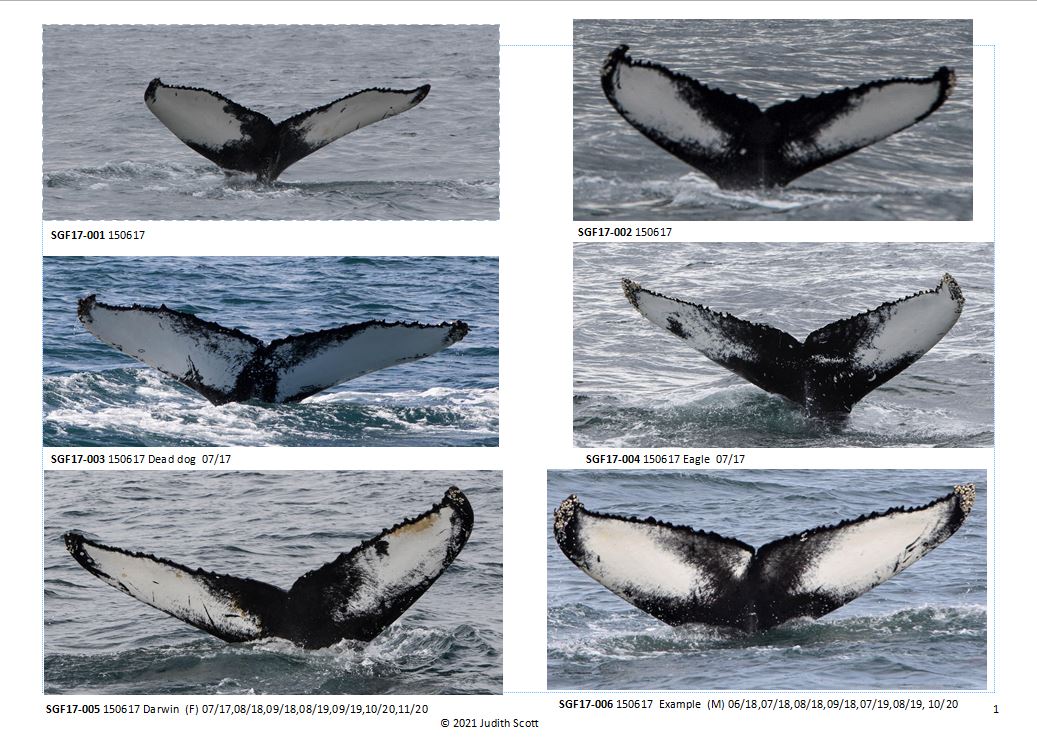
In Hólmavík, Westfjords Judith Scott has created the first photo-ID guide for the humpbacks seen in this small fjord. Until Láki Tours started the whale watch in Hólmavík nothing was known about the individual humpback whales that use this fjord to feed, such as number of individuals and how long they stay. With the humpbacks we use black and white patterns on the bottom of the tail to identify the individuals. Humpback whales migrate long distances for feeding and breeding, so sharing these photos with other researchers allows us to learn more about there they go to breed. We know some of the humpbacks we have seen from Hólmavík migrate all the way to the Caribbean or West Africa in winter. So far we have matches made between Hólmavík and Guadeloupe, Dominican Republic, Turks and Caicos Islands and Cape Verde off Africa! We also have matches with other feeding grounds, Svalbard and Greenland.
Láki Tours Passenger Survey Presented at Third IceWhale Conference
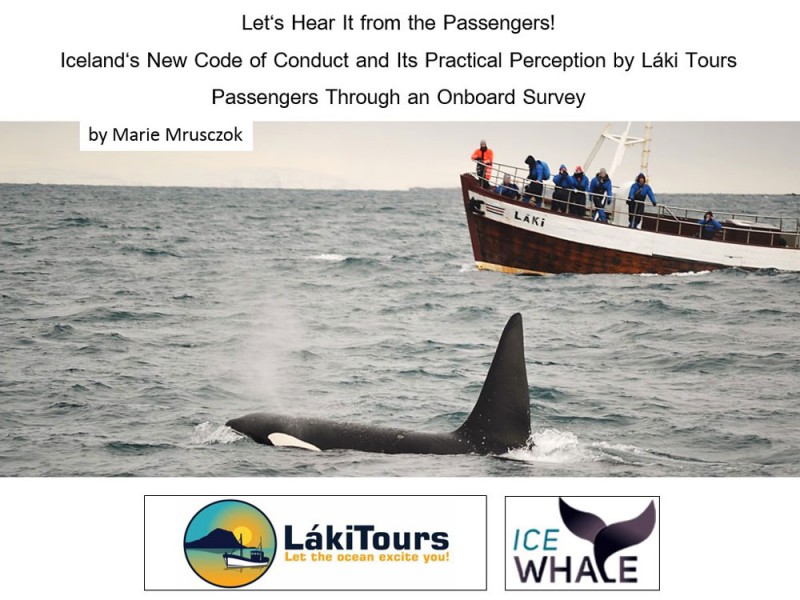
28.09.2015: We would like to thank all passengers that have participated in our onboard survey during the last summer season! Last Friday we presented the results of this survey at the IceWhale seminar in Reykjavík. (IceWhale is the Icelandic Whale Watching Association and one of its tasks is to bring all whale watching companies together to discuss topics on conservation, research, management, commercial aspects etc.) As a result of our survey, we had a great majority of 93% of our participants speaking out in favor of our new Icelandic Code of Conduct and against disturbance of the animals we are watching. It’s very valuable for us and other whale watching companies in Iceland to know that most passengers would choose to rather stay further away if there is a potential disturbance to the whales – and watch them from a distance displaying natural behavior instead of harrassing them for a close look. A lot of our onboard participants gave great additional input and also rated our company according to their experiences. Thank you all again, you really made a difference!
This survey will be ongoing during the winter season with modified questions and in cooperation with the department of environmental psychology of the University of Bielefeld. We hope for just as much interest and participation during the winter season as we had in the summer.
More information about the first Orca ID Catalogue, Edition 2015
08.02.2015: In the first edition of our orca ID catalogue you can find pictures of most of the killer whales we have encountered during the last three seasons, in fact, of 100 individuals. If you have been on a tour with orca sightings you can now compare the pictures you have taken yourself to the pictures of the family groups in the catalogue to find out which ones you have seen. Have you been on one of our summer tours and seen little baby “Rainbow” (SN004) with its family? Or maybe you have spotted the two big brothers “Boromir” (SN044) and “Faramir” (SN045) that come to Snæfellsnes with their family in winter?
If you come on one of our future tours, we will have the catalogue ready for use on our boats to identify the killer whales we encounter right on the spot. We also welcome the use of the catalogue on board the boats of other Icelandic whale watching companies.
The catalogue has been sent to researchers and whale watching companies in several countries that have their own ID catalogues to see if there are matches between the populations. So far, we have not encountered any new matches apart from the (already known) conformity of a few individuals that are also seen in the Shetland Islands. But we will keep you updated!
We hope that this will help us track migration patterns of “our” killer whales. If you see killer whales in other parts of Iceland we would be very happy to hear about it – let us know on facebook or via e-mail which groups you have spotted!
You can download a free PDF copy of the catalogue’s first edition (2015) here: